
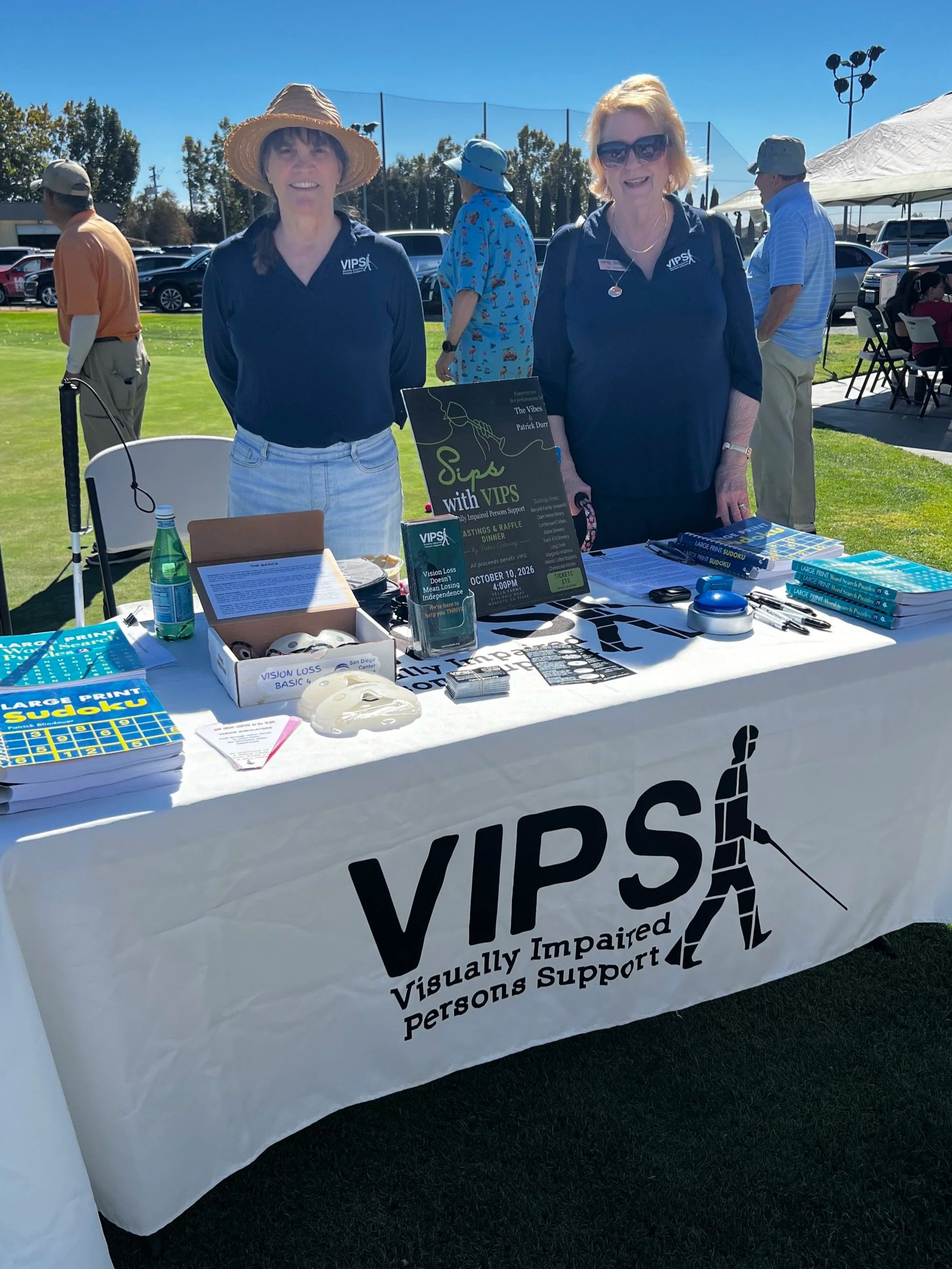
Liz Hosmer has dedicated her career to supporting individuals who are blind or visually impaired.
Her journey began working at Enchanted Hills Camp for the Blind and grew into a lifelong commitment to the field, including earning her master's degree in Education of the Visually Impaired at SFSU and working with several organizations serving individuals with vision loss. With decades of experience in nonprofit work, education, and vision services, Liz brings an incredible depth of knowledge and passion to the VIPS community.
Liz has been involved with VIPS for 10 years and has served as Board President for the past four. Who better to sit down with and learn from than someone whose professional journey and personal passion have been so closely connected to the mission of VIPS?
Roberta: Hi, Liz. Can you tell me a little bit about your background working with the visually impaired and blind community?
Liz Hosmer: Sure. When I was 15, I made a friend who was blind. And turns out, a few years later, his mother became the camp director of Enchanted Hills Camp for the Blind, owned by the San Francisco Lighthouse for the Blind. And he said– when I graduated from high school– he said, "You should apply. I'm working up there this summer. You should go too. It would be fun." And it was. So that sort of started my career. I did six years at that camp in the summer. Loved it, loved it, loved it! Met all kinds of people with vision impairment, from really small kids to very old adults. And so that kind of became my pathway.
Then I went through San Francisco State University to get my master's in Education of the Visually Impaired, and then went to work for the Blind Babies Foundation, and that was based out of San Francisco, but I covered their Central Valley area. And when I was hired, they said I could live in Modesto or Stockton. And since I knew one person in Modesto, I moved to Modesto. And I worked for Blind Babies Foundation for 12 years. Had a couple kids. Was covering 17 counties, and it just got to be too much driving. So left them for a while. I worked for the Merced County Office of Education as an infant visual specialist for a year. And then I went to work for an adoption agency for 12 years. 12 years is my thing. Then I left there, and Blind Babies Foundation hired me back to manage a grant out of the Fresno office, and that was based at Valley Children's Hospital. So I drove to Fresno every day– it was supposed to be two days a week, and then it was every day. But I've always stayed involved with this community, even when I did different things. And so, I worked at another couple of nonprofits, and then Janice Vella asked me 476 times if I was interested in joining the board of VIPS. And one day she broke me down, and I said yes. And I've been here for 10 years, and I love it.
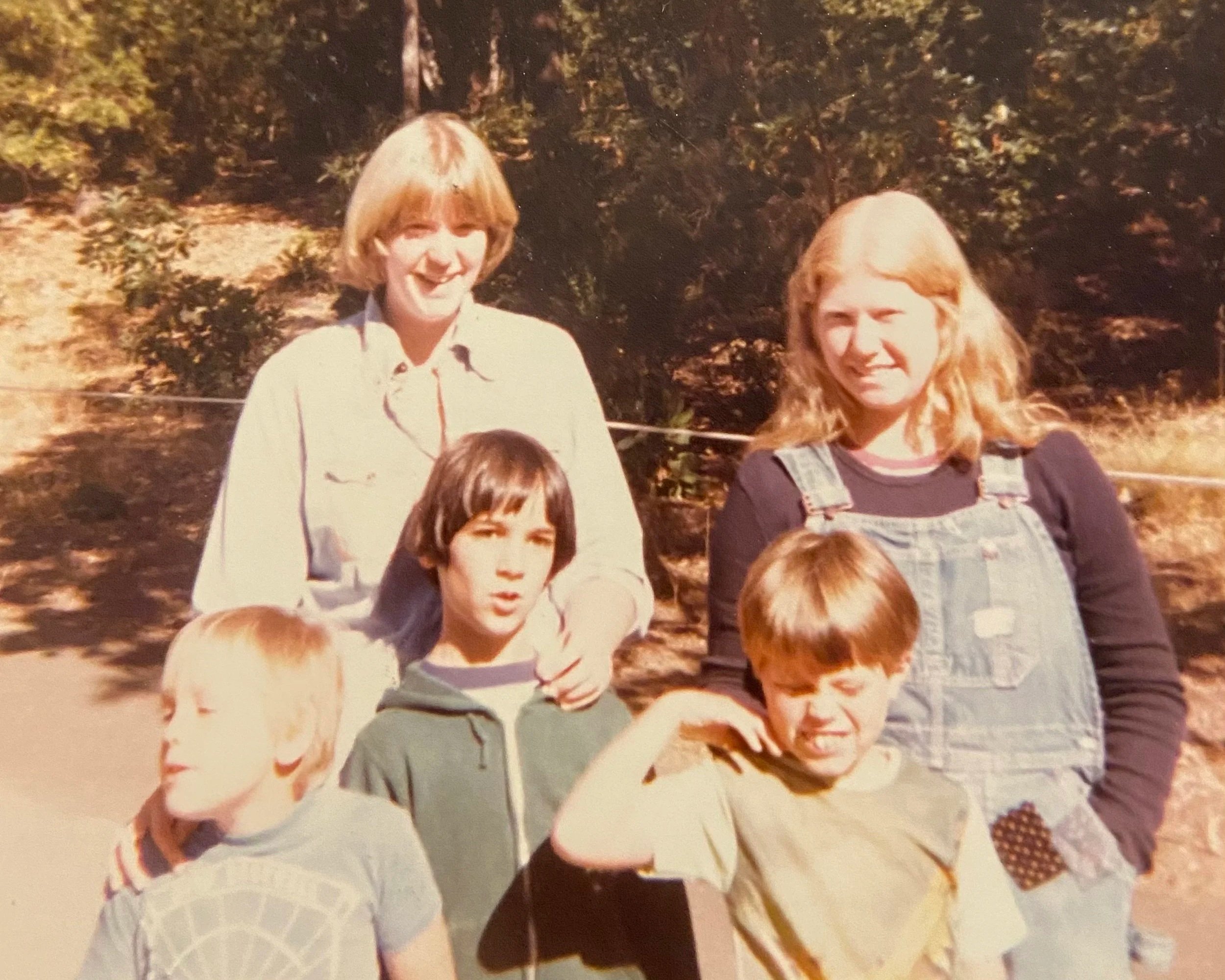
Liz Hosmer (above, left) at Enchanted Hills Camp for the Blind, 1975
Roberta: Great. So, tell me a little bit about your experience with visual impairment.
Liz Hosmer: Well, my mom had macular degeneration, and so did two of my aunts. So, you know, it's in the family. And I was diagnosed about ten years ago with kind of a dormant– I mean, it was just there. They said, you know, we'll just watch it. Didn't interfere with anything. But about a year and a half ago, things started changing. So it was very odd to become a client at VIPS.
Liz Hosmer: I remember telling the eye doctor, "Look, I'm not afraid of vision loss. I mean, I've been working with families, helping them deal with their kids with vision loss and teach their kids forever, you know.” But I am afraid of losing my independence. That's the big scary thing for me.
“But it’s been a journey and VIPS has been a big help. For one thing: just providing in community. ”
Liz Hosmer: You know, my best friends don't really understand because they don't know anything about vision loss, but everyone at VIPS does. That's a big deal.
Roberta: Can you speak a little bit about the treatments you've been trying out?
Liz Hosmer: Okay. Well, I have dry macular degeneration in both eyes. And one eye was worse, so they started out with injections in the left eye. And I would tell everybody: I was scared to death about getting a needle in my eye– It doesn't hurt. So don't freak out. I mean, it's the idea that freaks you out. And then my right eye started going down too. In the meantime, a new treatment, Valeda, came out– it's a light therapy. And there was a huge study done under clinical trials, and 60% of the people in the light therapy got better. And so the FDA like quickly approved it. And all the insurance companies covered it. So you go in and you just look at lights for ten minutes and you're done. But you do it nine times in three weeks, and then you're off for sixteen weeks, and then you do it again.
Roberta: So are you doing that with the injection still?
Liz Hosmer: Yeah, and I'm now having injections in my right eye too.
Roberta: Have you noticed any changes for yourself?
Liz Hosmer: No. (she laughs) And the injections are just to keep it from getting worse, maybe. And you really don't know if they've worked until like three and a half years or so.
Roberta: What do you think, in your opinion, is the appeal of trying to do therapies for vision rather than just letting the vision be what it is.
Liz Hosmer: Well, vision is a big deal. It's a big deal. And there's a lot of things tied to it, like driving and reading and managing your life and safety and all of that stuff. I was talking to my friend with macular degeneration today, and she said, "I'll do any darn thing they tell me, if it might help." You know, people are very protective of their vision. They're very afraid of vision loss. I read a study once– a hundred years ago, when I was in graduate school– that said that people were more afraid of being blind than getting cancer. And I bet that would still be true today, because people don't know anything about being blind. They know stuff about cancer.
Roberta: Yeah. Yeah, that's so interesting. I wonder why regular everyday people are so not versed in vision loss– in eye conditions?
Liz Hosmer: It's because blindness is a low incidence population. So in the world of disabilities, there are far more people with cerebral palsy or Down syndrome or whatever, than there are being blind. I bet most people, your age especially, have never met a blind person, or you know, experienced life with them ever. Because there’s just not that many of them. The population gets bigger as you get older– macular degeneration and glaucoma are expanding fields. But I think that's why. They just don't know about it.
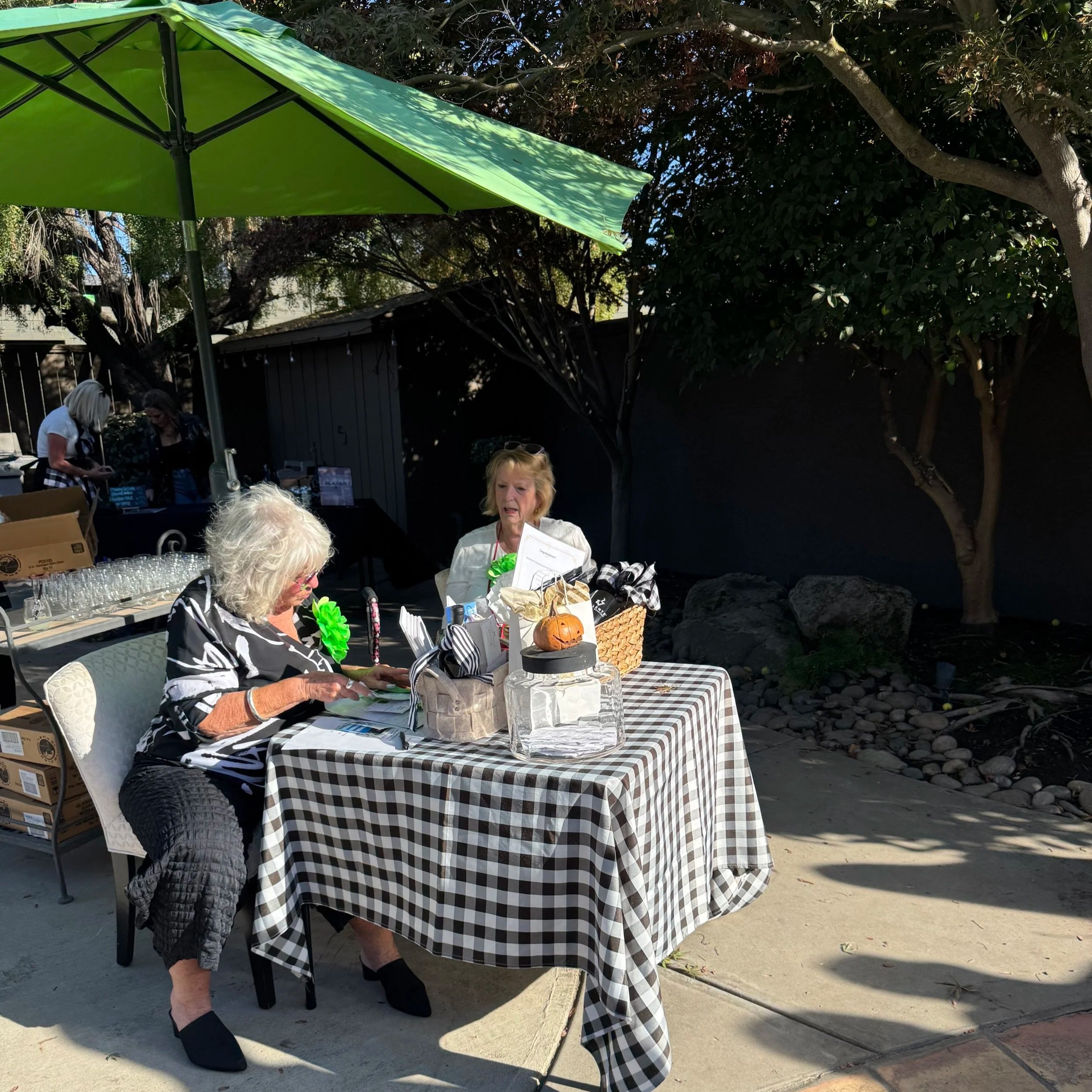
Liz Hosmer with Janice Vella at Sips with VIPS, 2026
Roberta: Having been with VIPS for so long, you've seen different iterations of the organization. Can you speak to what you're excited about now and possibly in the future?
Liz Hosmer: It's definitely been a work in progress. And we've had a lot of ups and downs, partially due to the fluctuations of granting from the government and all the changes and all of that stuff. That makes it really hard on a little tiny agency. But I would say that we have the strongest programs right now we've ever had– that I've ever seen that I feel most confident about. And the strongest staff to help with that. One of the things is we have reignited our desire to have our staff be educated more about visual impairment. I would love to see them have degrees in it, but that's hard to come by. But to get just a lot of information and training before they attempt to, you know, meet a family who's really struggling.
Roberta: For families that have family members dealing with vision loss and blindness, is there anything specific you want them to know about VIPS?
Liz Hosmer: Yeah. Well… an eye doctor, a retinal specialist, an eye surgeon, whatever, their job is to fix eyeballs, and when they can't fix it, they shoo you out the door. They don't mean to to be rude or anything. But, that's when you need us. Because when you go home or your loved one goes home, don't you want to know how to make things easier for them? Don't you want to know how to help them navigate your home and your street and your neighborhood? That's what we teach.
“We teach people how to be independent in their own homes, and that’s pretty darn important. Nobody likes to be dependent on other people.”
Roberta: How is VIPS different than, let's say, Blind Babies Foundation or the other nonprofits that you've worked with? What do you think is the thing that makes VIPS special?
Liz Hosmer: Well, the thing that's really different for me is mostly I worked with school age and babies and toddlers, and this is a very adult population, and as such, the needs are different. Probably the majority of our clients were independent, successful people in their real life, and then had a vision loss. So that's a different population. It they have different emotional needs and support needs, than like a family of a blind child does. So it's a different skill set, I think.
Roberta: Yeah.
Liz Hosmer: Oh! And technology is incredible– and horrible– all at the same time. All at the same time. But you know, really, in a nutshell, technology has been a total boon for people with blindness. You know, wearable GPS, and META glasses, and talking screen readers– all of that! It’s a whole different world than it was 30 years ago.
One of the things that makes VIPS unique is our focus on serving adults 55 and older who are often navigating vision loss or blindness for the first time. Many have spent their entire lives being independent, and suddenly find themselves facing new challenges, adjusting to a different way of living, and sometimes feeling forgotten or isolated.
“VIPS provides more than practical skills and resources; we offer a place where people feel seen, understood, supported, and connected to a community of others who understand what they’re going through.”
Roberta: You said your mom and aunts had macular. How did they deal with it? Did you experience them as their vision progressed and changed?
Liz Hosmer: They both saw it as a great tragedy. My mom told me never to use the word “blind” in front of her. And I said, "Mom, I'm a teacher of the blind. That's my career." She goes, "I don't care. Don't use that.” So we would go into a doctor's office and she would say things like, "Um, I don't see that print very well. Could you read it to me?" You know, she just didn't like that word, it was very stigmatizing to her.
Roberta: Taboo.
Liz Hosmer: Mm-hmm. And my Aunt Gladys, her whole family treated it like it was just a giant tragedy.
Roberta: Do you think it's because family and friends are just not equipped with how to help somebody? What can family and friends do? Now that you have this information from years of working in this community, is there anything you would have told younger you in order to help with your mom and your aunt with processing and accepting?
Liz Hosmer: Well, some of the things I did do, like I bought my mom a talking watch for Christmas, and she was not happy with it. And a talking alarm clock. Well, as time went on, she loved that thing, and then she said, "Did they make one that looks more like jewelry?" The other thing I would tell people– and I mean, I've been preaching this since day one– is be a narrator of life with your blind people. For example, with kids, with their parents, I would tell them turn off the TV, turn off the radio. Narrate your life. You hear those dishes? Those are dirty dishes from breakfast, and I'm putting them in the dishwasher right now. Now let's listen to the dishwasher and what it sounds like. Oh, I hear a garbage truck. Do you hear that truck? That is the garbage man, and they pick up our trash.
“Narrate life and just scale it up age appropriately for people in your life. Tell them if there’s something in front of them when they’re walking. Oh, we moved the chairs. Let me show you how different they are. That sort of thing. Narrate any changes like that.”
Liz believes that navigating blindness requires courage, not only from the individual experiencing vision loss but also from the family members walking alongside them. Throughout her years of working with families, she found herself returning to one simple but powerful message: Be brave. For someone adjusting to blindness, and for the loved ones learning how to support them, bravery means being willing to face the unknown, embrace change, and move forward even when the path feels uncertain. It is a reminder that vision loss may change the way someone experiences the world, but it doesn't have to define the possibilities ahead.
Roberta: Yeah. I'm also learning with the population that we majority serve, there are also other underlying health conditions that clients are dealing with. In your experience– because I'm sure you dealt with that with Blind Babies Foundation too– how can clients help navigate that for themselves? Or family members help navigate that? Because, I think what you said about the doctors are great for diagnosing and all of that, but really it's the at home stuff– the advocacy work– that many need help and training on.
Liz Hosmer: That's the exact word I was gonna say. Be your own advocate, and if you can't do it, empower your family member to be an advocate for you. So go into those doctor's offices or whatever with a list of every question you want answered, and don't leave till you get it.
Roberta: In the ideal world, what do you see for VIPS in the next five to seven years?
Liz Hosmer: I would like to see a licensed, certified orientation and mobility instructor. I think that is incredibly important. There are not a lot of them. They're very hard to find. But I want our clients to learn how to safely navigate a curb, how to safely cross a street. How do you know if that light's red or green? There's a lot of things you can learn about orientation and mobility, and you don't always want to rely on the things you buy, like META glasses, which should never be used for mobility. But we need an orientation mobility teacher who can help our people be safe. We can do it in the house, but state law won't let us do it outside. And we absolutely need that. That would be my number one.
Roberta: How would you like to see other programming expand and grow?
Liz Hosmer: Oh, I want to do... I mean, there's so many things I want to do. I want to do workshops. I want an eye doctor to come and do a session on macular degeneration. We could fill that room. And it wouldn't be like the four minutes you spend in the doctor's office and then they're off to the next person. We really need that.
Roberta: Yeah, education.
Liz Hosmer: Education, absolutely. And you know what? I'm finding that our people need the socialization, too. At one point– and this was before I was there– VIPS became a social club, and people would just hang out there, and nobody ever did anything. And they didn't learn anything, but they had a good time. And a conscious decision was made to do away with that and go to train a training model, which I think is what was needed. But we could still have social stuff because people need community.
Roberta: Yeah, I agree. What do you see for the board in the near future? What are you excited about? What do you hope for?
Liz Hosmer: Well, I think we have a bunch of doers on our board, which is really wonderful. After COVID– we had a director leave, too, then– we would have gone under without our board. And to a person, everyone on that board stood up and said, "I'll do this job. I'll do that job. I'll do this job. I'll do that job." And we kept the classes going, the lessons given, and the place running with our board members. So, I got nothing bad to say about any of them. I would like to see more men and more diversity in our board. And I'd also like to see more representation from Tuolumne County. You know, we serve them, and they don't have a face too much with us down here.
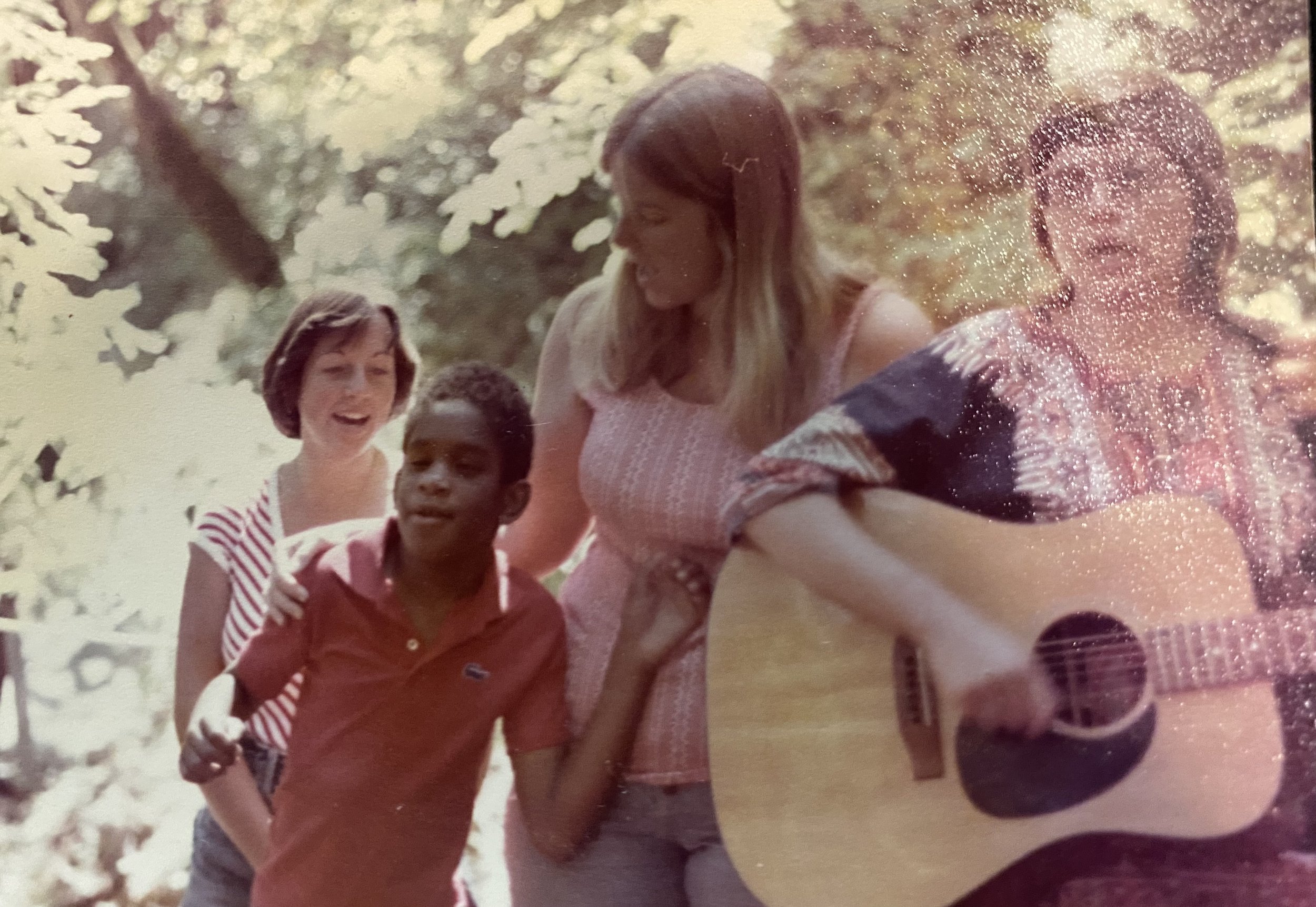
Liz Hosmer at Enchanted Hills camp for the Blind, 1979
Roberta: Can you talk a little bit about what it was like being a parent and working in a nonprofit, like Blind Babies Foundation, that serves families? What’s it like being a parent and trying to help parents?
Liz Hosmer: Well, when I had kids, the first thing I wanted to do was call every parent I ever had on my caseload who had a kid with colic and say, "I'm sorry, I didn't understand. I had no clue what you really meant." But it made me grateful, really. And also more understanding. I mean, parents are usually 99.9% born to be protective. Babies are tiny. You're protective. You want to coddle them and take care of them. And especially with blindness, that's not a great idea.
And I learned that from Ori Jean May, my friend Mike's mom. Mike was blinded in an explosion when he was three– he had vision until he was three. And can you imagine? I mean, he almost died. He was in the hospital. And when he came home from the hospital, she empowered him. He was climbing trees and radio towers, and learning electronics. And he sky dived! Why would anybody blind jump out of a plane? Why would anybody jump out of a plane? But he did, and he just was fearless. And his mom taught him that. And I'll always credit her for that. She was fierce.
But I remember I had a family that lived on Orangeburg, and they had a little boy with low vision– and his uncle had had low vision– and she would just lament all the time: “Poor Patrick. Oh, poor Patrick.” And so finally one day, I said, "We're going out to coffee, and Patrick's not coming. Tell your husband he's gonna take care of him. We're going.” We went out to coffee, and I said, “Look, you have got to stop freaking out every time somebody asks you about his vision.” Cause in the grocery store, somebody would say– he had Nystagmus and his eyes would move– and would say, "What's wrong with his eyes?" or "What was that?" And she would flip out, and act like it was a tragedy. So I told her, “Look at the example you're setting for Patrick. Any time somebody says anything, he's gonna go, ‘Oh, woe is me!’” So I told her to come up with a script. It can be three sentences or one sentence. “Oh, he's born with an eye condition. He's fine.” And I want you to practice it and practice it and practice it and practice it. And the next time somebody asks you, you just say that and move on, and Patrick won't grow up thinking that being blind is a horrible thing. She ended up speaking at one of our conventions, and she said, "I didn't even know what I was doing, and I wish my parents had done that with my brother."
Roberta: Yeah, I think that's really interesting because now we have social media. Whereas, maybe at that time, there’s not as much access to information, access to other blind families to help those families cope and understand. I feel like that’s one of the benefits to having social media– to having a society that is more interconnected– is that there are more examples for us all.
Liz Hosmer: Yeah, you know, shared experiences are good.
Today, social media and our increasingly interconnected world have created new opportunities for people with disabilities and their families to find one another. Families navigating vision loss no longer have to feel as though they are figuring everything out on their own. They can connect with others who have walked a similar path, learn from shared experiences, and see examples of what life can look like beyond a diagnosis. As Liz reflected, shared experiences are valuable. Sometimes, simply knowing that someone else understands what you're going through can make all the difference.
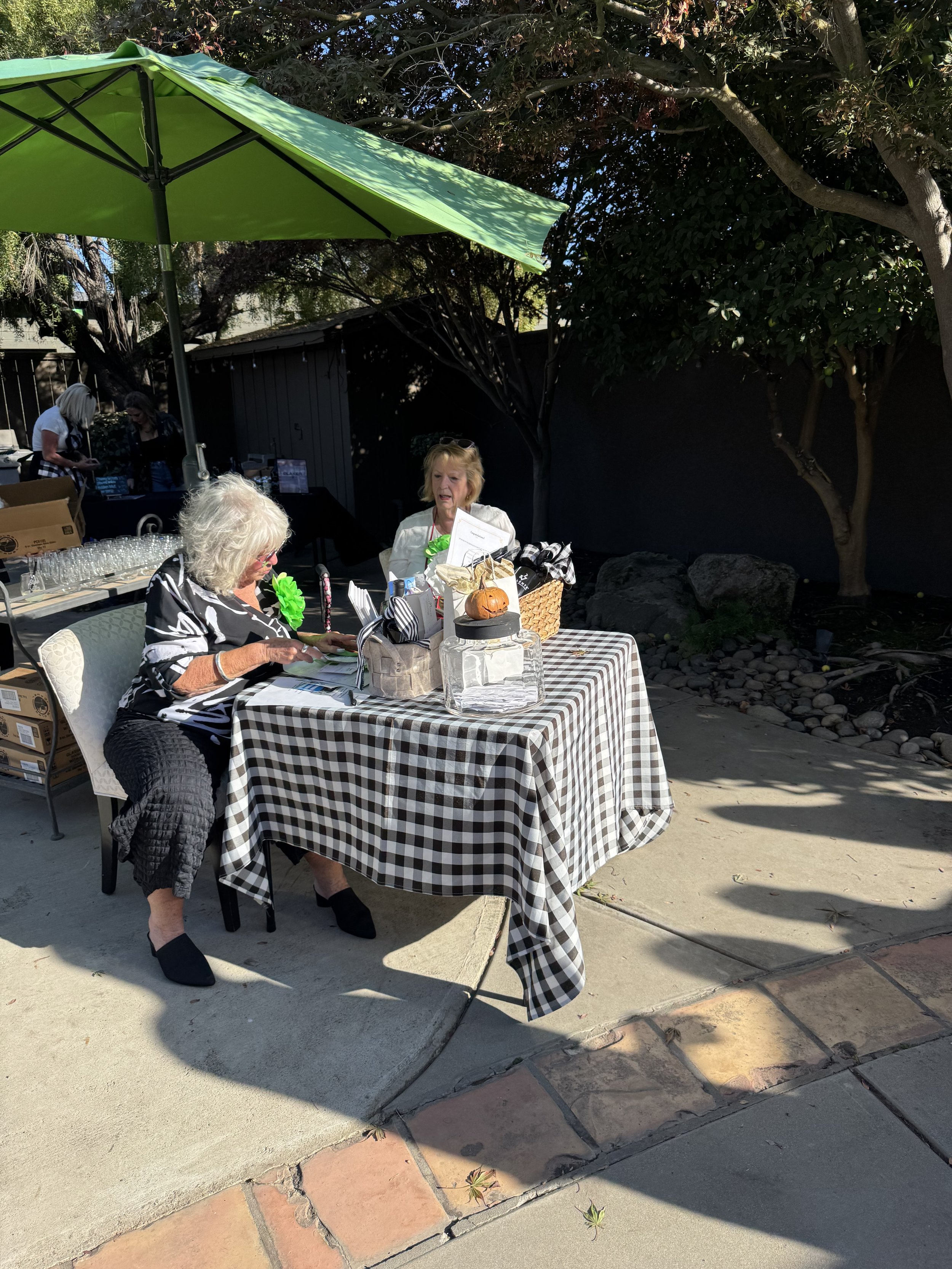
Liz Hosmer is a wonderful example of what it means to be an advocate in the low-vision community.
Through years of experience, compassion, and dedication, Liz has helped individuals and families navigate the challenges of vision loss, reminding them that they are not alone. As Executive Director of VIPS, I feel honored to share in the vision for VIPS's future alongside Liz Hosmer, who has been a mentor to me for much of my life. I've known Liz since I was 12 years old, and I can personally attest to the power of her influence. She is a strong, caring, intelligent, and generous mother, wife, and community member who has dedicated so much of herself to helping others.
Yet, even with all her knowledge and years of advocacy, Liz is also navigating her own journey with vision loss due to macular degeneration. Her story is a reminder that being an advocate doesn't mean having all the answers or being immune to the challenges of vision loss. It means continuing to learn, connect, share experiences, and show up for others while navigating your own path.
This interview was conducted as Liz Hosmer’s home in Modesto, CA on Tuesday, November 17, 2026.
